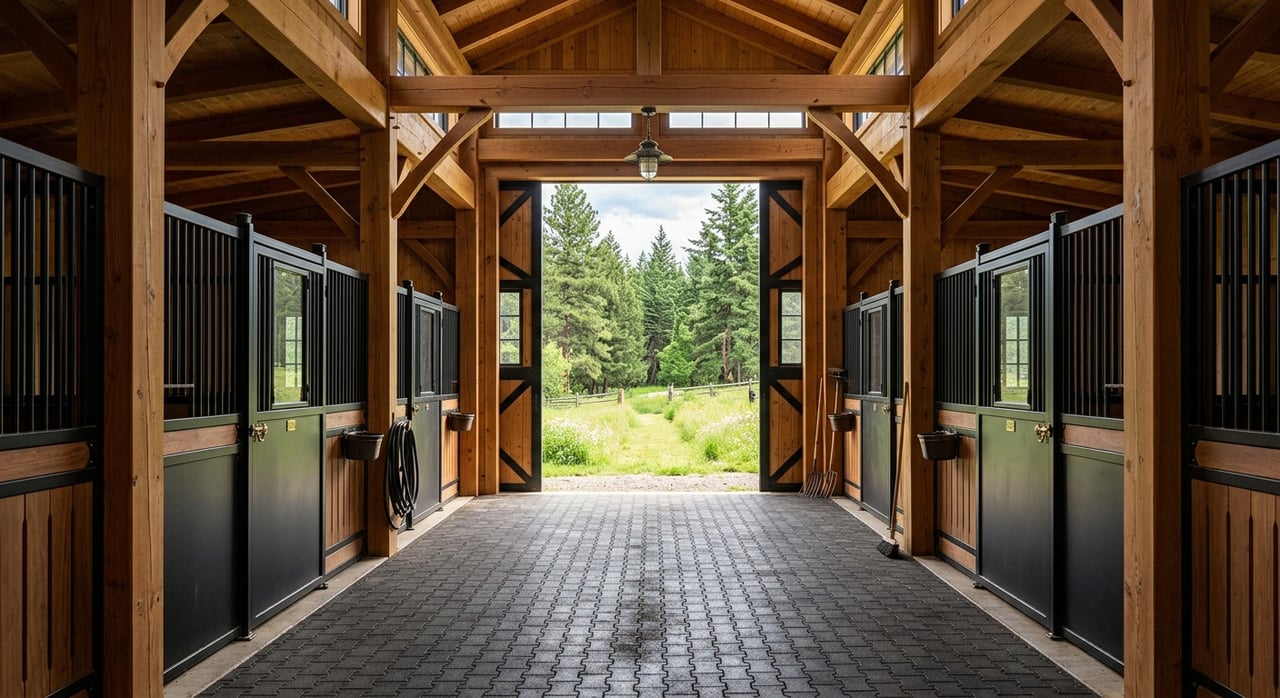
If you are looking for room to ride, space to breathe, and a rural lifestyle that still feels connected, Franktown deserves a closer look. This part of Douglas County appeals to buyers who want more than a house on a big lot. You may be searching for horse property, buildable acreage, or simply a home with long views and daily access to Colorado’s open land. In Franktown, those goals can align, but the details matter. Let’s dive in.
Why Franktown Appeals to Equestrian Buyers
Franktown is one of Douglas County’s long-established rural communities. In the county’s 2040 Comprehensive Master Plan, Franktown is described alongside Louviers and Sedalia as a century-old rural community with a quiet, small-town lifestyle.
That planning framework matters because it helps explain why Franktown feels different from a typical suburban edge market. The county’s stated vision for the area includes preserving open lands, scenic views, the Cherry Creek riparian corridor, and low-impact recreation. For you as a buyer, that supports a lifestyle built around space, privacy, and outdoor use.
Franktown is also not just one thing. Some properties function more like true ranch or agricultural land, while others are better described as large-lot residential acreage. That range gives buyers options, but it also means you need to evaluate each property on its own merits rather than assume all acreage works the same way.
Understanding Franktown Acreage Types
One of the biggest mistakes buyers make is focusing only on the number of acres. In Franktown, zoning, infrastructure, and site layout often matter just as much as lot size.
Douglas County zoning creates several broad acreage categories that buyers commonly encounter:
- A-1 agricultural land is generally 35 acres and larger
- LRR large rural residential land is built around 9-plus-acre lots
- RR rural residential land can begin at 2 acres when served by well and septic, with smaller lots possible where central water is available
This is why two homes with similar acreage can feel very different in practice. One parcel may have room for horses, outbuildings, trailer access, and usable turnout areas, while another may be constrained by septic placement, setbacks, topography, or vegetation.
What Makes a Property Horse-Friendly
If your goal is equestrian living, the real question is not simply, “How many acres is it?” The better question is, “How usable is the land for the way I want to live?”
Douglas County’s animal guidance gives a clearer picture. The county classifies horses as one animal unit each, and smaller lots can support horses under specific thresholds. According to the county packet, 2.3 to 4.49 acres allows one boarded horse, 4.5 to 8.9 acres allows two boarded horses, and 9-plus-acre parcels move into more flexible thresholds depending on zoning and review type.
That does not mean every qualifying parcel is automatically ideal for horse use. You still need to consider whether the site can comfortably support the features that make day-to-day ownership practical.
Key Site Features to Review
When you tour Franktown acreage homes, pay close attention to:
- Barn placement
- Arena or round pen space
- Paddocks and turnouts
- Trailer parking and access
- Manure handling area
- Setbacks and build envelopes
- Septic location and soil-treatment area
- Driveway layout for trucks and trailers
Douglas County specifically regulates barns, corrals, arenas, paddocks, run pens, round pens, and parking areas. The county also counts corrals and ungraveled parking toward the site’s maximum devegetated area, which can affect how much usable horse infrastructure a parcel can support.
Detached garages can matter too, especially if you need storage for equipment or recreational vehicles. On lots of 1 acre or more, Douglas County allows up to two detached garages with a total detached-garage area cap of 3,000 square feet per lot.
Trails Shape the Franktown Lifestyle
For many buyers, Franktown’s biggest advantage is not just private land. It is access to nearby horse-friendly recreation.
Douglas County identifies a broad network of horse-allowed trails and open-space properties in this part of the county. The county notes that these are soft-surface, non-motorized, multiple-use trails that support hiking, mountain biking, and horseback riding.
That distinction is important. If you ride regularly, access to soft-surface trails can be much more appealing than relying only on roads or paved corridors.
Horse-Friendly Areas Near Franktown
Several standout options are especially relevant to Franktown buyers:
- Hidden Mesa in Franktown includes multi-use horse, bike, and hiking trails, a round pen, and parking for 15 horse trailers
- Two Bridges Trail in Franktown runs 10.4 miles, connects with the Cherry Creek Trail, allows horse use on designated trails, and includes parking for 12 to 15 horse trailers
- Prairie Canyon Ranch in Franktown is managed as a working cattle ranch and is open for organized groups and horse rides by appointment
This kind of access helps define Franktown as more than a place with acreage. It supports a true rural recreation lifestyle, especially for buyers who want both private horse property and public trail options nearby.
Cherry Creek Trail and Public Access
Cherry Creek Regional Trail is another major part of Franktown’s appeal. Douglas County says the trail parallels Cherry Creek, connects broader parts of the region, and passes through Parker, Centennial, and Franktown.
For equestrian buyers, there is an important nuance here. Horseback riding is permitted on the Cherry Creek Regional Trail, but not across the full trail system at Castlewood Canyon State Park. That means trail access exists, but you should understand exactly where horse use is allowed if public riding is part of your routine.
This is one reason local guidance matters. A property may sound close to trails in a listing, but the type of trail access and the riding experience can vary quite a bit from one location to another.
Franktown Is Rural, But Not Isolated
Franktown often appeals to buyers who want a rural feel without feeling disconnected. Based on county planning, it is best understood as a trail-connected rural community with a village center around the Highway 83 and 86 crossroads.
That can be a meaningful difference if you are comparing Franktown with more remote acreage settings in Douglas County. Some buyers want a true ranch environment with larger agricultural parcels. Others want a home base with acreage, views, and horse potential, while still staying connected to services and recreation.
Franktown can fit either goal, depending on the parcel. That is why a property-by-property review is so important.
Due Diligence Matters on Franktown Acreage
Acreage buying is rarely just about the home itself. Long-term satisfaction often comes down to what you can actually do with the land and what it will take to maintain it.
Douglas County’s rural-living guidance highlights several issues you should review early in the process. These include whether the parcel was legally created, whether road and service access exists, whether the property has adequate water rights, and whether surveys, easements, deed restrictions, or covenants may limit future use.
The county also notes that mailing addresses can be misleading in unincorporated areas. A property may show a Castle Rock, Parker, Larkspur, Sedalia, or Franktown mailing address even when the governing jurisdiction is unincorporated Douglas County.
Water and Septic Questions to Ask
In rural Douglas County, water and wastewater deserve close attention. Douglas County states that the county government does not provide water service to residents, and well permits are required for properties without a public water supply.
The county also requires proof of adequate water supply for building permits. That includes a well test showing at least 1 gallon per minute, or use of a cistern if flow is lower.
Septic is just as important. The county health department requires septic permits for new systems and when a property with an existing septic system is sold. It also specifically recommends keeping horses and other livestock off the septic soil-treatment area to help avoid premature system failure.
For horse property, this can affect where you place fencing, paddocks, and turnout areas. A parcel may seem open at first glance, but the septic layout can reduce your usable horse space more than expected.
Wildfire Planning Is Part of Ownership
In rural Douglas County, wildfire mitigation is part of the ownership picture. The county notes that many homes face wildfire hazards because they are located amid vegetation and in more remote settings.
Construction in the Wildfire Hazard Overlay District is subject to mitigation standards. Before issuing a building permit, the county evaluates driveway access, building site location, building materials, and defensible space requirements.
For you, that means usability goes beyond the house and barn footprint. Access, vegetation management, and site design all shape how the property functions over time.
How to Think About Franktown Fit
The best way to approach Franktown is to think in terms of lifestyle fit, not just acreage count. Some buyers want a private horse setup for personal use. Others want trail access, room for outbuildings, and a more refined acreage home. Still others are comparing Franktown with other rural communities in Douglas County and trying to find the right balance of privacy, flexibility, and access.
Franktown stands out because it offers multiple versions of rural living. It can support equestrian use, acreage ownership, and day-to-day outdoor recreation, but the exact fit depends on zoning, water, septic, trail proximity, and whether your intended use is private or more business-oriented.
If you are considering acreage or equestrian property in Franktown, careful property review is essential. That is where experience with rural due diligence can make a real difference. When you are ready to explore your options, connect with Michael Turner for thoughtful guidance on Franktown acreage homes, horse property, and rural Colorado real estate.
FAQs
What makes Franktown attractive for equestrian living?
- Franktown offers a rural setting, horse-friendly trail access, open-space amenities, and a range of acreage property types that can support equestrian use depending on zoning and site layout.
How many acres do you need for horses in Franktown?
- In Douglas County, horse allowances depend on zoning and parcel size. The county’s animal guidance states that 2.3 to 4.49 acres allows one boarded horse, 4.5 to 8.9 acres allows two boarded horses, and 9-plus-acre parcels have more flexible thresholds depending on zone district and review type.
Are all Franktown acreage homes suitable for horse property use?
- No. A parcel’s usability depends on more than acreage, including setbacks, septic placement, water supply, driveway access, topography, and room for barns, paddocks, arenas, and trailer parking.
What trails near Franktown allow horseback riding?
- Douglas County identifies horse-friendly access at places such as Hidden Mesa, Two Bridges Trail, Cherry Creek Trail, Bayou Gulch, Dawson Butte, and Spruce Mountain, with some trail-specific rules on where horse use is allowed.
What should buyers review before purchasing acreage in Franktown?
- You should review zoning, legal parcel status, access, water supply, septic details, easements, deed restrictions, covenants, wildfire considerations, and whether the property supports your intended horse or outbuilding use.
Is Franktown more like a ranch area or a large-lot residential market?
- It can be either. Franktown is best understood as a spectrum, with some properties functioning like true ranch or agricultural land and others operating more like large-lot residential acreage homes.